Table of Contents
A purple single-crystal quartz gemstone
Introduction
- Amethyst is a type of crystal, which is light purple to dark purple quartz, mainly composed of silicon dioxide (SiO2). Amethyst belongs to the trigonal crystal system and is commonly found in columnar crystals with developed columnar striations and visible polygonal etching patterns. Amethyst has a glassy luster, with a refractive index of 1.544~1.553, a birefringence of 0.009, and a dispersion value of 0.013; The Moh hardness is 7; Has piezoelectric properties.
- The color of amethyst is often uneven, with parallel and alternating purple and colorless bands, as well as irregular solid block, flocculent color blocks or hourglass shaped bands, showing obvious multi-color characteristics. Under heating, the color center of amethyst will be destroyed, and the purple color can completely fade. When heated to about 240-270 ° C, it will turn yellow. After heat treatment, amethyst can change from purple to yellow, brown, colorless, green, etc.
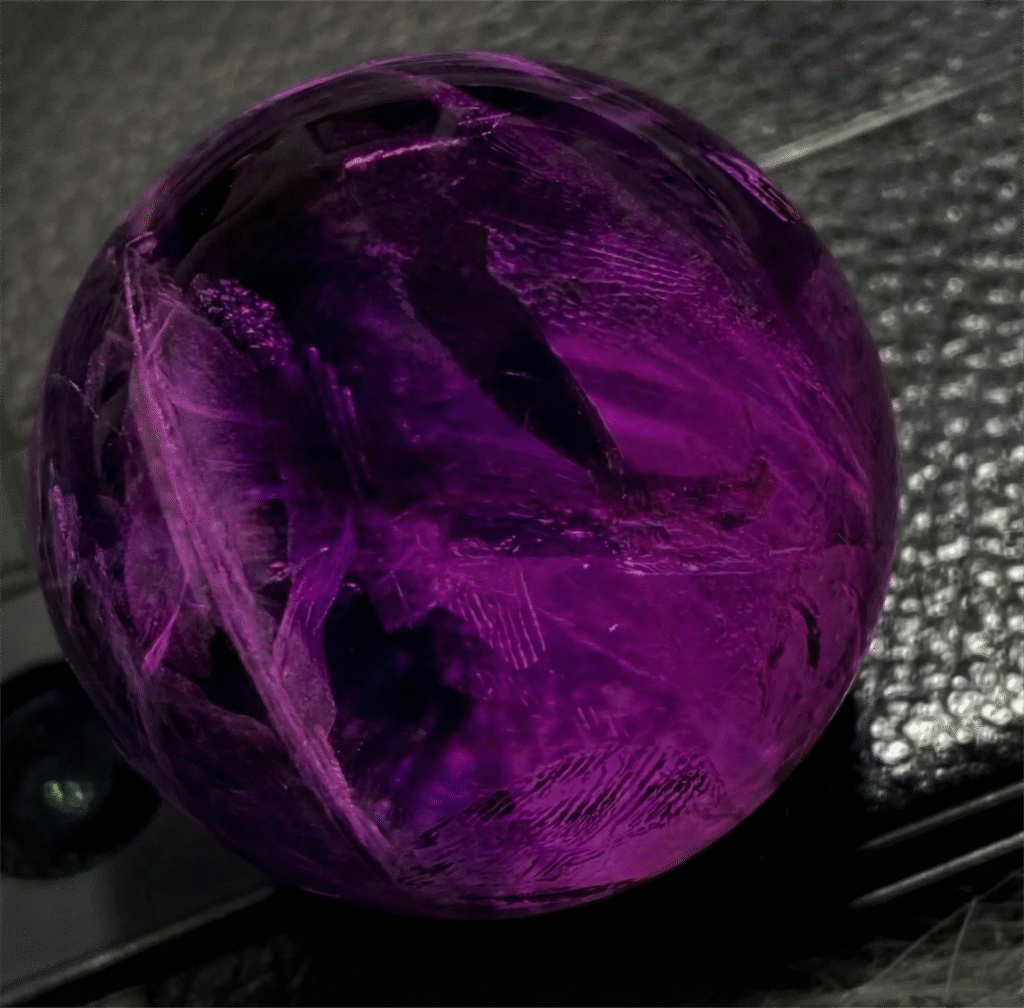
- Purple crystals commonly have two-phase inclusions, healing cracks, and “false lines” or “zebra stripes” (alternating dark and light colors in healing cracks). Amethyst, due to the development of Brazilian twin crystals, is parallel to the rhombohedral crystal plane. Two adjacent twin crystals have one layer that is left-handed and the other layer that is right-handed, canceling out or partially canceling out the optical rotation effect, resulting in a propeller like interference pattern. The main production areas of amethyst are Brazil, South Africa, Russia, Madagascar, Sri Lanka, Zambia, Mexico, the United States, Morocco, and China. Amethyst is often used as necklaces, bracelets, crystal balls, and various ornaments.
Appraisal
Due to the fact that crystal jewelry no longer has the crystal appearance of the original stone, distinguishing between “natural” or “synthetic” crystals requires careful consideration of color distribution and internal packaging characteristics. On this basis, accurate differentiation can be made using infrared spectroscopy.
- Color distribution: During the crystallization and growth process of natural crystals, changes in the surrounding environment can cause variations in temperature and pressure, as well as changes in component concentrations. These changes to some extent result in uneven color distribution, resulting in natural variations. Synthetic crystals have bright colors and are evenly distributed, resulting in a cobalt blue color that natural crystals do not have.
- A key and highly reliable method for distinguishing natural crystals from synthetic ones lies in examining their internal inclusions—often observable with the naked eye, a magnifying glass, or a gemological microscope.Based on testing this sample, combined with years of practical identification and teaching experience, we have observed the following distinguishing characteristics:
- Natural crystals typically contain abundant gas-liquid inclusions, along with various solid mineral inclusions. Common examples of these solid inclusions include needle-like hematite, tourmaline, chlorite, calcite, fluorite, and pyrite. The presence of such natural mineral inclusions is a strong indicator that a crystal is natural.
- Synthetic crystals, by contrast, often exhibit only gas-liquid two-phase inclusions—specifically those shaped like “nails” or “breadcrumbs.” These inclusion types are a telltale sign of synthetic origin.
Additionally, natural crystals frequently display growth defects and associated features such as cracks, twinning, negative crystals, phantom crystals, and nodules. The presence of these characteristics also generally confirms a crystal’s natural authenticity.
- Infrared spectral characteristics: Under the irradiation of infrared light, gemstones undergo transitions in the vibrational energy levels of lattice (molecules), complex anion groups, and coordination groups, and absorb the corresponding infrared light to produce a spectrum called infrared spectrum. Infrared spectral features are an effective means of detecting and studying mineral composition and structural structure, and provide strong evidence for distinguishing crystals from synthetic crystals.
Value
- Historical status
Before the 18th century, amethyst was one of the most precious gemstones, with a value comparable to diamonds, sapphires, rubies, and emeralds.
- Modern market
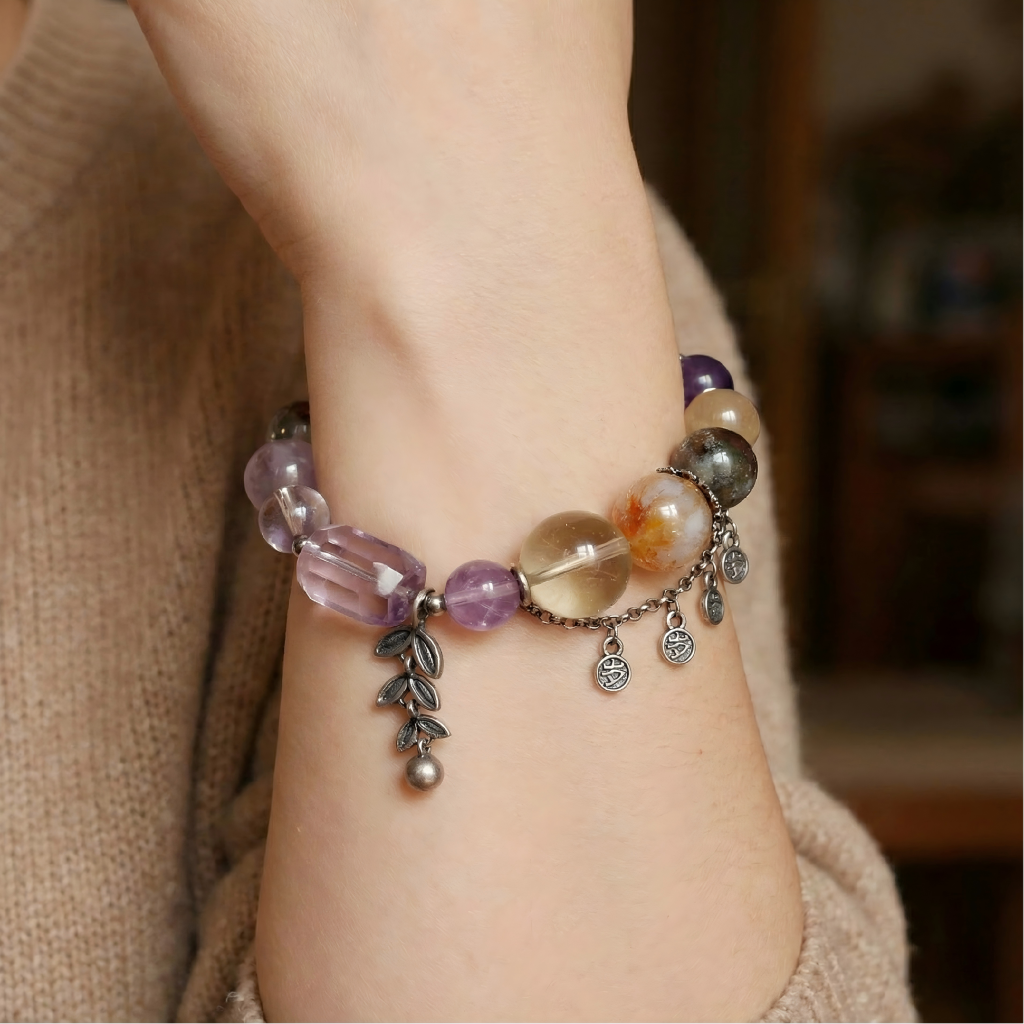
Although amethyst belongs to the middle and low-end gemstones, those weighing tens of carats and with a rich, bright, and pure color can still be classified as collectibles. High quality amethysts are usually cut into facets for use in jewelry inlay or collection, while larger ones can also be used for carving; Those of lower grade can be ground into curved surfaces or polished into beads, often used for punching holes and threading strings to make necklaces, bracelets, etc
Maintenance
Purple crystals need to pay attention to daily maintenance and avoid collisions as much as possible to prevent damage. Under certain high temperatures, amethyst will fade, so it is necessary to avoid exposure to high temperatures. When taking a shower, washing clothes, cooking, or exercising, one should remove amethyst jewelry to avoid corrosion from acidic substances, which can cause it to lose its original luster. Only by nurturing with care can the beautiful amethyst shine forever, and let the amethyst protect you.
Efficacy and Function
- Functional organs: ears, nose, eyes, central nervous system
- Lack of amethyst energy: symptoms such as poor attention, insomnia, tinnitus, tension, high stress, headache, dizziness, etc.
- The gentle energy of amethyst can soothe the brain, relieve tension and stress, and thus help improve sleep quality. It can stimulate brain cell activity, promote the improvement of memory and thinking ability. It can make people’s attention more focused and help improve brain function, which has a positive auxiliary effect on both academic and work.
Attribute
- Amethyst, with roots in Greek mythology, is widely recognized as a symbol of wisdom and spirituality.
- In the context of the Five Elements theory (a core concept in traditional Chinese philosophy), amethyst is associated with the “Fire” element. It is also believed to have a close connection to the human body’s heart chakra and third eye chakra (brow chakra), embodying the ideals of balance and harmony.
- The color purple itself carries an air of mystery. Since ancient times, it has been revered as an “imperial color”—reserved for rulers and nobility. Beyond its association with status and loyalty, purple is also attributed with symbolic, almost mystical meanings: it is said to guard love, attract abundance, and deepen one’s spiritual awareness.
Summary
Any excess or deficiency of energy is not good for the body, so we need to understand what crystal energy we lack before deciding which crystal to match. Everyone lacks different energy, which needs to be calculated based on your date of birth. If you don’t know what energy you lack, you can leave me a message.
Amethyst
Information
- Alias: violet quartz
- Category: silicon dioxide
- Color: Purple red, dark purple, blue-purple, deep red, etc
- Crystal system: trigonal system
- Hardness: Level 7 (Mohs scale)
Five Elements attributes:
Fire
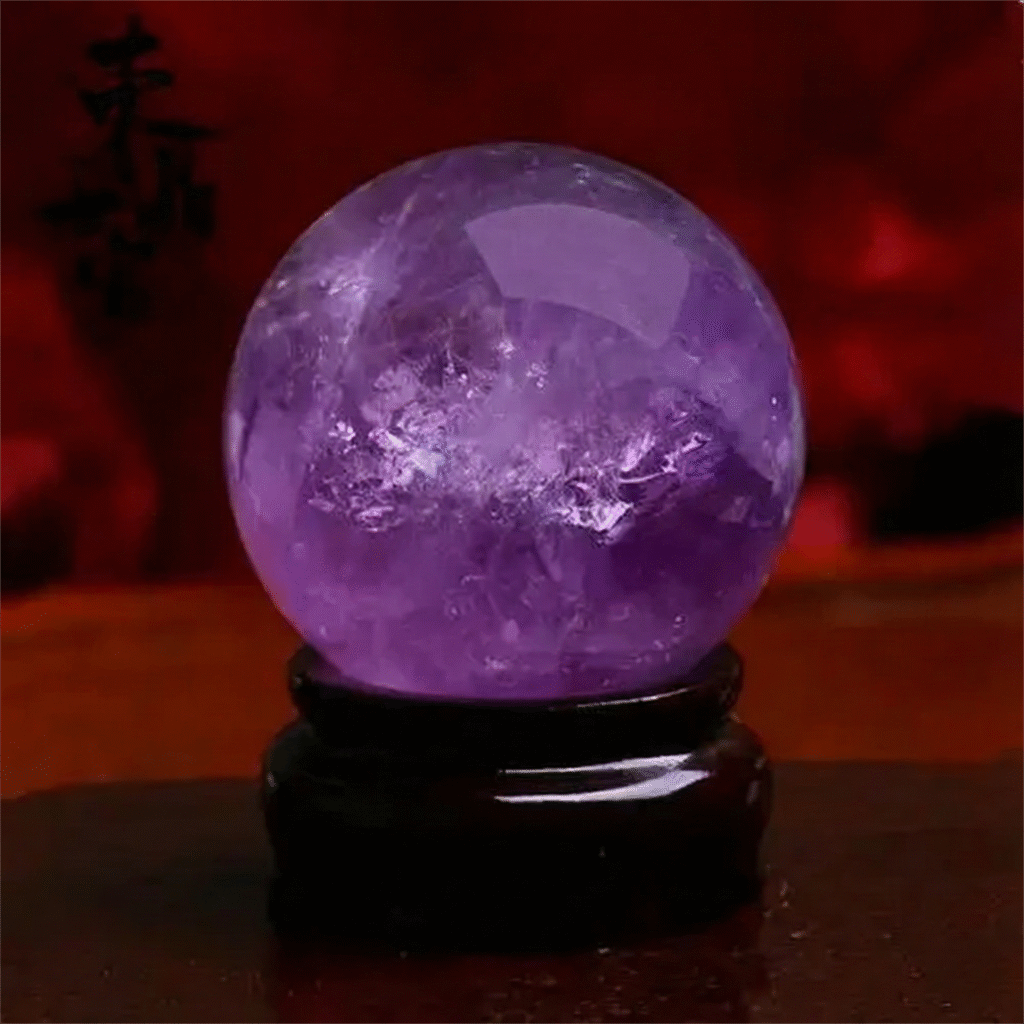
The Feng Shui Function of Amethyst:
- Amethyst can effectively eliminate negative energy in the environment, such as stress, tension, or conflict, and enhance the positive energy field of the living room or office.
- Placed in the living room or bedroom: creating a harmonious and peaceful atmosphere, reducing conflicts among family members.
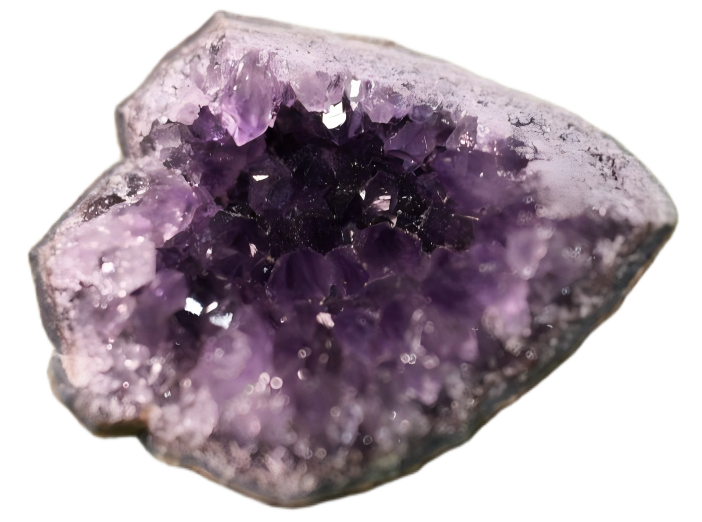
- As a decoration for town houses, amethyst caves or clusters of amethysts can absorb wealth, boost popularity, and dispel negative energy. They are suitable for placement at the diagonal corner of the entrance or in the financial position.
Constellation
- Sagittarius
- Aquarius